Executive Summary
The Burden of Reason: When Filicide Meets Postpartum Decompensation
In the criminal jurisprudence of filicide, no legal dilemma tests the conscience of juries more severely than maternal infanticide triggered by acute psychotic decompensation. On September 4, 2026, after seven grueling days of jury deliberation totaling forty hours, Massachusetts Superior Court Judge William F. Sullivan declared a mistrial in the trial of Lindsay Clancy.
The Anatomy of a Tragedy: Lindsay Clancy
On the evening of January 24, 2023, inside a quiet suburban home on Summer Street in Duxbury, Massachusetts, 32-year-old Massachusetts General Hospital labor-and-delivery nurse Lindsay Clancy choked her three children—five-year-old Cora, three-year-old Dawson, and eight-month-old Callan—using exercise resistance bands in the basement.
Moments later, she slashed her own wrists and neck with a kitchen knife and threw herself from an upper-story window into the backyard snow. The fall shattered her spine, leaving her permanently paraplegic. When her husband, Patrick Clancy, returned from picking up a takeout dinner at ThreeV restaurant and children's medication at a local pharmacy, he encountered a scene of unthinkable devastation.
When emergency responders stabilized Lindsay, she recounted having heard a disembodied male voice that commanded her to kill the children and herself, describing the horrifying sensation that it was her "last chance" to save them.

The Psychiatric Trajectory & Medication Cascade
The defense built its case on medical documentation establishing that between May 2022 and January 2023, Lindsay had been prescribed a dizzying carousel of more than a dozen distinct psychotropic medications—frequently initiated, discontinued, and cross-titrated within brief spans:
Following the delivery of her third child, Clancy experienced intrusive dread and insomnia. Telehealth psychiatrist Dr. Jennifer Tufts initially diagnosed generalized anxiety disorder and initiated Zoloft (sertraline).
Struggling with debilitating insomnia, she presented to emergency care. Providers rapidly cycled through prescriptions including Ativan (lorazepam), Buspar (buspirone), Prozac (fluoxetine), Remeron (mirtazapine), Klonopin (clonazepam), and the antipsychotic Seroquel (quetiapine).
She voluntarily admitted herself to McLean psychiatric facility. She was formally discharged with a diagnosis of Major Depressive Disorder without psychotic features, an assessment the defense later cited as a catastrophic diagnostic oversight.
Defense expert Dr. Phillip Resnick, prominent forensic psychiatrist, evaluated Clancy and testified that she was operating under profound psychotic delirium, completely robbed of the substantial capacity to comprehend moral wrongfulness.
Calculated Opportunity & Deceit
Assistant District Attorneys Jennifer Sprague and Shanan Buckingham argued the act was cold, organized, and premeditated. They emphasized that Clancy checked transit times on Apple Maps, sent Patrick to a specific restaurant distant enough to guarantee an empty house, used exercise bands requiring sustained manual force, and hid the bodies in the basement. Clinicians had not documented active psychosis just 24 hours prior.
Postpartum Involuntary Intoxication & Mania
Defense attorney Kevin Reddington argued Clancy suffered from postpartum psychosis exacerbated by severe antidepressant-induced akathisia and mania. Journal entries presented at trial revealed a woman tormented by irrational terror, disassociation, and guilt. The defense argued that high-functioning demeanor is a recognized feature in psychotic disorders where parents mask symptoms out of shame.
The 11-to-1 Deadlock and Retrial Setting
Following 40 hours of deliberation, the jury informed Judge Sullivan they were hopelessly deadlocked. Post-trial juror statements revealed 11 of 12 jurors voted for Not Guilty by Reason of Lack of Criminal Responsibility, blocked by a single holdout. Judge Sullivan set retrial planning for early 2027.
The Dark Shadow of Maine: Constance Fisher (1954 & 1966)

Throughout the public commentary of the Lindsay Clancy trial, one historical ghost was invoked repeatedly by prosecutors and skeptic commentators: Maine mother Constance Fisher. The Fisher saga remains the most haunting cautionary tale in American legal-psychiatric history regarding institutional release and the recurrence of psychotic filicide.
In March 1954, in Waterville, Maine, 24-year-old Constance drowned her three young children—Richard (6), Daniel (5), and Deborah (8 months)—in the family bathtub. Her husband, WWII veteran Carl Fisher, returned to find the doors locked, the children dead, and Constance unconscious beneath a bed after drinking poison in a suicide pact with her own mind. She left a note asserting that God had commanded her to spare the children from the corruptions of the world.
Evaluated by the state, Constance was diagnosed with paranoid schizophrenia with severe postpartum onset. She was declared unfit for trial and committed to the Augusta State Hospital.
The Tragic Release & The Second Catastrophe (1966)
At Augusta State Hospital, Constance underwent insulin coma therapy and hormone regimens. Within five years, amidst the nascent nationwide movement toward deinstitutionalization and outpatient family reunification, medical staff declared her in total psychiatric remission. Her husband Carl, who maintained deep devotion to her, petitioned for her discharge. Despite private warnings from at least one medical consultant urging sterilization, Constance was released into Carl's care in 1959.
This time, the state indicted her on three counts of murder. At trial, her defense entered pleas of Not Guilty by Reason of Insanity. The court agreed that she suffered from recurrent dissociative paranoid psychosis, committing her to Augusta State Hospital for life. In 1973, Constance escaped from the hospital grounds; eight days later, duck hunters discovered her body in the Kennebec River, dead of an apparent accidental drowning or suicide.
The Architecture of Criminal Responsibility
To understand why the Clancy jury deadlocked and why postpartum defense cases split courts, one must examine the three distinct legal standards governing insanity and infanticide in common-law systems.
The M'Naghten Rule
The strictest cognitive test. The defendant is presumed sane unless it is clearly proven that, at the time of the committing of the act, the party accused was laboring under such a defect of reason that they did not know the nature and quality of the act, or did not know what they were doing was wrong.
Commonwealth v. McHoul
Massachusetts adopted the American Law Institute (ALI) Model Penal Code test: a person is not criminally responsible if they lack substantial capacity either to appreciate the criminality/wrongfulness of their conduct or to conform their conduct to the requirements of law. Crucially, Massachusetts requires the Commonwealth to prove sanity beyond reasonable doubt.
The Infanticide Acts
Codified in English, Canadian, and Australian law: when a mother causes the death of her child under 12 months while the balance of her mind is disturbed by lactation or the effect of giving birth, the offense is treated statutorily as manslaughter/infanticide, avoiding murder convictions and prioritizing treatment.
Dr. Phillip Resnick's Five Classifications of Filicide
Dr. Phillip Resnick, who evaluated both Andrea Yates and Lindsay Clancy, formulated the internationally recognized psychiatric classification of child murder by parents:
The Precedents Catalog
Examining parallel cases through the lens of psychiatric evidence, motive, and courtroom verdict.
Andrea Yates

Drowned her five children (Noah, John, Paul, Luke, and Mary; ages 6 months to 7 years) in the bathtub under the delusional conviction that Satan inhabited her and the only way to save their souls was to send them to heaven before they reached the age of accountability.
Constance Fisher
Drowned three children in 1954 believing God commanded her to save them; institutionalized for 4 years, declared cured, released, had three more children, and drowned all three in 1966 during a catastrophic postpartum relapse.
Deanna Laney

Stoned her two young sons to death and critically injured a third in rural Texas. Every evaluating psychiatrist—including experts for the prosecution—agreed she was under an acute religious command hallucination believing God ordered her to execute them before the apocalypse.
Susan Smith

Strapped her sons (Michael, 3; Alexander, 14 mos) into her car and rolled it into John D. Long Lake. Staged a 9-day national media spectacle falsely accusing a Black carjacker. Motive: her wealthy lover broke off their relationship because he did not want children.
Forensic & Legal Comparative Matrix
A direct, side-by-side comparative analysis of the four archetype cases illustrating the boundaries of psychiatric defense:
| Case & Year | Primary Diagnosis | Alleged Mechanism | Concealment / Guilt | Legal Standard | Ultimate Disposition |
|---|---|---|---|---|---|
| Lindsay Clancy Mass. 2023–2026 |
Postpartum Psychosis, Bipolar, Medication-Induced Akathisia | Exercise bands; immediate suicide jump | Sent husband for dinner; denied symptoms to clinicians 24 hrs prior | McHoul (Substantial Capacity; Burden on State) | Mistrial (11-1 Deadlock); Retrial planned for 2027 |
| Constance Fisher Maine 1954 & 1966 |
Paranoid Schizophrenia with Perinatal Relapse | Bathtub drowning; chemical poison suicide | Locked doors; wrote notes stating God ordered her to save them | M'Naghten / Irresistible Impulse | NGRI Both Times; Died 1973 after hospital escape |
| Andrea Yates Texas 2001 |
Severe Postpartum Psychosis & Schizoaffective Disorder | Bathtub drowning; waited for police | Called 911 immediately; stated Satan compelled her to save souls | Strict Texas M'Naghten (Burden on Defense) | NGRI on 2006 Retrial; Kerrville State Hospital |
| Susan Smith S. Carolina 1994 |
Major Depression, Dependent Personality (No Psychosis) | Submerged vehicle; walked away | Fabricated 9-day carjacking hoax; blamed fictitious Black man | M'Naghten (Fully Cognizant of Wrongfulness) | Guilty of Murder; Life Sentence |
Multimedia Courtroom & Document Archive
Original network broadcasts, trial proceedings, and exhibits detailing the Clancy trial and historical footage:
Live Testimony & Arguments in Plymouth Superior Court
Extended network feed capturing psychiatric expert testimony, cross-examination on medication side-effects, and jury instructions before Judge William F. Sullivan.
The Medical System Gap & Postpartum Support
Investigative analysis examining how perinatal mood and anxiety disorders (PMADs) develop rapidly, the perils of abrupt medication switches, and the warning signs frequently missed in clinical settings.
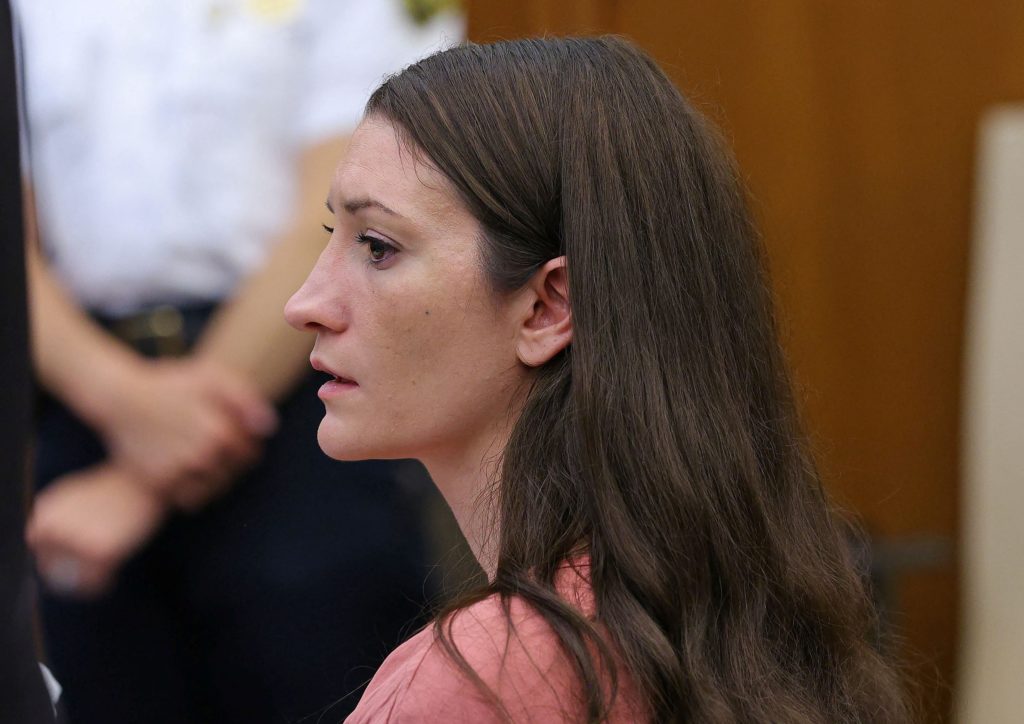
The Handwritten Notes & iPhone Journals
Introduced during trial, Lindsay Clancy's digital notes and journals captured a terrifying internal battle. In one entry, she wrote: "I just want to feel human again... I have so much love for my kids, why does my mind feel like it is trying to destroy everything?" The prosecution countered by highlighting searches for carotid artery anatomy performed days earlier.
Verified Sources & Legal Citations
All dates, statutes, diagnoses, and courtroom records in this feature article have been cross-verified against official court transcripts, state statutes, and major news service reports: